Pricing strategies in the hospitality industry are the key to unlocking your property’s profit potential. When implemented correctly, pricing strategies allow hotel owners to optimize room rates, bolster profits and keep occupancy high.
Key highlights:
A hotel room pricing strategy optimizes room rates based on demand factors to drive total revenue per available room (Total RevPAR).
Implementing dynamic pricing strategies adjusts rates according to market demand, seasonal trends, competitor pricing and guest segments to maximize occupancy and revenue.
Tactics like promotional pricing, targeted upselling, custom packages and loyalty discounts help sustain high occupancy and increase average daily rates (ADR).
Canary's guest experience platform seamlessly executes rate and upselling strategies to increase profitability and guest satisfaction.
What Is a Hotel Room Pricing Strategy?
A hotel room pricing strategy helps you keep up with fluctuating demand for hotel rooms. By considering internal and external market factors, hotels price their product each night in a way that drives Total RevPAR. Season, day of the week and local events are some of the things that affect pricing strategies, along with the difference in prices between room types.
Why You Need a Dynamic Hotel Room Rate Pricing Strategy
Some guests are surprised to learn that the price of a room doesn't stay the same every day, no matter how far in advance they book it. Since you're on the other side of this equation, you know how filling each room at the right rate and not at the last minute is an art. Every master artist needs their tools, and yours are variable pricing by room type, occupancy-based yielding and dynamic pricing tuned to market demand.
Dynamic pricing helps hotels stay competitive while increasing revenue and can have a major impact on a property. Check out this comparison between two fictional hotels, Aspire Hotel and Basic Stay Hotel, to see what a difference it can make.
Pricing Approach
Aspire Hotel
Basic Stay Hotel
Rate-Setting Method
Adjusts room rates based on demand, competitor pricing, seasonal trends and other market conditions
Maintains the same room rates throughout the year
Peak-Season Response
Raises rates strategically to capture more revenue when demand is high
Misses opportunities to increase revenue during high-demand periods
Low-Season Response
Uses targeted promotions to support occupancy when demand slows
Struggles to fill rooms during slower periods
Guest Segmentation
Tailors promotions to specific customer segments and market conditions
Offers discounts and packages without considering customer segments
Business Impact
Balances occupancy and room revenue as demand changes
Leaves potential revenue on the table during both peak and off-seasons
Both hotels have the same number of rooms and are located in the same market, but Aspire Hotel consistently outperforms Basic Stay Hotel in occupancy rates and revenue. Why? Because it understands the power of effective hotel pricing strategies.
What Factors Should I Consider When Pricing a Hotel Room?
Your goals may influence the price of a room, but competitors’ prices and the number of people visiting your area are also at play. Here is how you work through the dynamics.
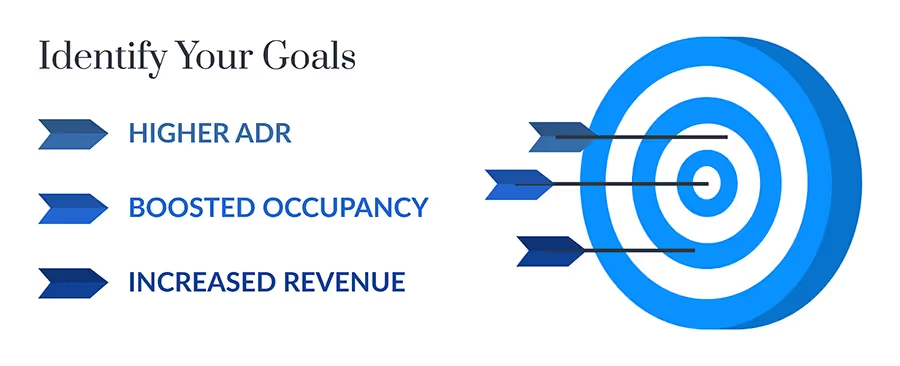
When it comes to setting your hotel’s prices, the first step is to identify a goal. Are you aiming for a specific higher average daily rate (ADR), boost occupancy or increase revenue to a magic number? Next, you need to conduct thorough market research and competitive analysis to identify pricing opportunities and challenges.
This is when several factors begin to interplay. Before setting room rates, consider the following key factors:
Pricing Goals: A fixed number for RevPAR or total revenue goal is your north star that keeps you on track.
Market Demand: The number of travelers staying overnight in your market changes and so does how long they stay for.
Guest Segments: Business and leisure travelers are the most common differentiators, but different patterns and financial impacts emerge: families, source markets, empty nesters and romantic getaways.
Competitor Rates: Your rate is always viewed and assessed by guests in the context of what your competitors charge and whether the difference is worth it.
Property Positioning: Your brand and reviews drive perception that translates into revenue potential.
Booking Patterns: Your data can reveal anything from seasonality to average lead time and loyalty, which can all influence your price.
Proactive reputation management is another key to creating your pricing strategy. To command top dollar, you need to rank high on key online travel agencies (OTAs) and third-party platforms like Tripadvisor and Google. One easy solution for increasing rankings is to use an advanced mobile check-out tool that encourages guests to leave positive reviews on these sites. This can work wonders for your online reputation — and ultimately your pricing power.
4 Effective Strategies for Optimizing Hotel Room Pricing
Although Market Growth Reports says 82.3% of hoteliers in 2025 used a revenue management system (RMS), taking your first steps to optimize hotel room rates does not have to involve an RMS or complex rate rules. Depending on your property, you may be able to address key factors with relatively simple approaches. Here are four effective strategies to get you started.
1. Seasonal Pricing
Imagine it's peak season and rooms across your hotel and the competition are filling up fast. One simple way of dynamic pricing is adjusting your rates up to capitalize on that demand. Alternatively, during periods of lower demand when the market is squeezed for guests, you can strategically adjust your rates to attract more market share, ensuring a sustainable level of occupancy.
For instance, if your standard rate is $150, you may drop it to $120 during low and shoulder seasons to entice budget-conscious travelers.
2. Event-Based Pricing
Staying on top of major events and conventions occurring in your market allows you to take full advantage of the opportunities they present to maximize revenue. For example, if a major music festival is coming to town, this provides the perfect opportunity to increase rates and make the most of an influx of travelers.
3. Booking-Based Pricing
Dynamic pricing can also account for reservation-related factors such as length of stay, popular days and booking windows. For example, if you operate a leisure hotel where most bookings are on weekends, it may be beneficial to offer a discounted rate for a three-night-stay that includes Thursday or Sunday night, to encourage longer stays.
4. Forecast-Based Pricing
By leveraging historical and market data, you can predict demand for future dates and adjust rates to reflect that. Basic forecasts live in spreadsheets, although this is where pricing tools and software, such as a guest experience platform and revenue management systems (RMS), eventually come into play. An advanced RMS can play a pivotal role in optimizing room rates by providing real-time insights that enable data-driven decisions, allowing you to respond to market changes quickly.
How to Power Profitability with Promotional Pricing
Dynamic room pricing provides one avenue for increasing hotel revenue, but temporary discounts and promotional offers are another key strategy in your management toolbox, helping you attract more guests, boost occupancy and drive profit during slower periods.
Cancellation Policy Pricing
One strategic method for promotional pricing is offering different rates based on the flexibility of your cancellation policy. You may offer a lower rate for a non-refundable booking with lead-time restrictions, and a slightly higher rate for a looser cancellation policy. This way, price-sensitive visitors can opt for the cheaper room while those who value flexibility can pay a bit more for peace of mind.
There are, however, times when you shouldn't charge extra for cancellations. Occasionally being flexible will help you connect with your guests in the long term. Use your own good judgment to apply this pricing in the best way.
Special Offers
Another way to apply promotional pricing is to attract customers by offering a special deal. For instance, you may offer a 10% discount for bookings made at least 30 days in advance, or a “stay three nights and get the fourth free” promotion. These types of offers can be especially effective during slower periods or for specific target markets, like families.
While these types of promotions, depending on your Property Management System (PMS), could be evergreen, timing and communicating them for specific need dates can create more urgency and drive uptake.
Upsells
Dynamic upselling offers allow you to make the most of your property’s different room types. If you have a guest who booked a standard room and is coming in with three young children, and you know they'll likely be more comfortable in a suite, you could offer an upgrade for a small upcharge each night. It’s a boost for your ADR and the guest experience.
Keep in mind that the upcharge should stay in relation to other costs, such as taking the room from inventory for the entirety of their stay.
While upselling often focuses on room upgrades, cross-selling is all about those little extras that can take your guest experience from good to great. Consider offering visitors a discounted spa package or the option of a dining credit when they book their room. By including these add-ons at a special price, you can lock in some incremental revenue before guests even set foot in your hotel.
Thoughtful positioning plays an important role here, as do free offers between the cross-sales. For example, a guest who asks to leave early might be given a pre-ordered grab-and-go breakfast, and a family might select the free toy rental box in their room before looking into paid options.
Packaged Rates
Bundling services into packaged rates is another great way to create value for your guests while simultaneously driving higher revenue. You might offer a romance package that includes a deluxe room, champagne and a couple’s massage, or you might create a family package featuring tickets to a nearby theme park, a family-friendly room and daily breakfast.
Best of all, you don’t need lots of additional services to offer and include. Even including a bar credit or free water and “end of day treats” in the room can go a long way depending on your guests and what else the market is offering.
Loyalty-Based Pricing
You can encourage repeat bookings from customers with a loyalty program that offers special rates or perks. According to CBRE, loyalty member contribution to occupancy surpassed 50% in 2023 in a continuous upward trend.
If your hotel is not part of a chain-operated loyalty program, you can tier discounts based on completed stay stats: more stays, higher discount percentages. A tiered approach not only rewards your most loyal customers, but also encourages others to book with you often to unlock those higher discounts.
While a discount-based strategy can drive direct bookings, caution is needed not to weaken your ADR by offering discounts to guests who would have otherwise paid full price. Another option is offering loyal guests exclusive benefits instead, such as free room upgrades, dining credit, late checkout or a complimentary bottle of wine upon arrival.
Enable Hotel Price Optimization with Canary
Finding the right pricing strategy and dynamically adjusting rates is on your agenda daily. Canary is here to empower the decisions you make and easily connect your rate strategies with the right guests, maximizing your revenue potential and their guest experience.
With Canary you can:
Target offers in the moment: reach all in-house guests via guest messaging with a special dining offer for the same night.
Present cross-sale options before arrival: include personalization options in your mobile check-in process.
Let AI offer add-ons: follow hotels that have increased their upsell conversions 4x with AI-generated offers.
Rank high and charge more: manage your reputation with a mobile check-out tool that encourages guests to leave positive reviews.
Book a demo today to see how Canary powers dynamic hotel pricing strategies that maximize revenue.
Frequently Asked Questions
How Do I Price a Hotel Room?
The right price for a room depends on several factors. Signs that a rate is right are a sustainable amount of bookings coming in within a reasonable lead time, by the right type of guest, who will enjoy and spend on your complete product offering.
What’s the Difference Between Dynamic Pricing, Variable Pricing and Yield Management?
There can sometimes be confusion between dynamic pricing, variable pricing and hotel yield management. Variable pricing is about adjusting rates based on factors such as room type, view or amenities. Yield management, on the other hand, focuses on adjusting prices based on occupancy thresholds. Dynamic pricing can take revenue management in hotels to the next level by adapting to market trends and demand in real time.
What Is Hotel Rate Undercutting?
Competitive hotel rate undercutting is a price race to the bottom that can't last. It happens when two hotels think that the only way to get guests is to offer lower rates than the other. Rate undercutting can also mean offering a lower rate directly (or somewhere else) than on an OTA. The latter causes rate disparity and can be contractually penalized by the OTAs.
What Is a Best Available Rate Pricing Strategy and When Should Hotels Use It?
A best available rate pricing strategy is based on a daily fluctuating best available rate (often referred to as BAR rate). When using this strategy, other discounts, such as prepaid rates or promotions, float as a percentage off the BAR rate. It is a common method of managing rates within modern PMS and Central Reservation System (CRS) environments.
What Is the Right Pricing Strategy for a Luxury Hotel?
The same factors that apply to pricing any hotel also apply to luxury hotels, while arguably factors such as positioning are weighted differently. An effective luxury hotel pricing strategy is laser-focused on the right guest segments and manages long-term brand perception while meeting the hotel’s revenue goals.
What Features Should I Look for in a Room Price Management Tool?
Before evaluating a room price management tool, consider your hotel’s rate structure and the types of offers and promotions you want to run. With that in hand you can begin to assess tools on their functionality and ease of use in reaching your target audience.
What Are the Best Pricing Strategies for Corporate vs Leisure Hotel Segments?
Corporate rates are often negotiated in advance and stored in your system under specific rate codes as fixed rates for the year. A catch-all corporate rate applying to any qualifying business traveler is a common method of attracting more corporate spend.
Leisure travelers use a variety of booking channels, so it is worth investigating where most of your market’s leisure travel is booked and ensuring you can be found. Your goal is to have the same price across all channels, which is called rate parity. To lower your cost of booking, you can optimize your website for conversion by including an AI webchat, so guests who shop around for better rates book on your website.